Prospects need to trust you. But what is trust, anyway? And how do you build it?
June 25, 2026
By Rachel Smith
Originally published February 2022. Updated June 2026.
Sales is about developing relationships, and good relationships are built on trust. But what is trust exactly? How do we, as humans, decide who to trust? What are the traits we look for, either consciously or subconsciously? What’s happening in our brains when we feel as though we trust someone?

Perhaps you think you’re a trustworthy person and believe that others can sense that about you. But the way humans determine who to trust and what makes someone trustworthy doesn’t always make a lot of sense—and we’ve been doing it for a long time.
In the folklore of central and southeastern Europe, if a badger (sometimes it’s a bear) emerges from its lair on Candlemas, is frightened by seeing its own shadow and goes back to bed, winter will last for another six weeks. Sound familiar?
In North America, we swapped the badger (or maybe a bear) for a ten-pound rodent weather center, but we kept the original date (Candlemas is February 2nd, Groundhog Day).
I think I’ve made my point.
You and I might not be able to define trust in a succinct, scientific way, so let’s look to the experts. There are sociologists, psychologists, and neuroscientists who study the intricacies of trust every day. Surely, they must have a definition nailed down. Right?

Unfortunately, no. Even professionals who study trust struggle to define it. Some describe it as a brain process, while others focus on the feeling of trust.
Just as there are varying definitions, there are many ways to study trust. We’ve covered game theory extensively in our blogs (here and here), and that is one method researchers have used to learn more about human social interactions and how trust is determined.
Newer fields like neuroeconomics and social cognitive neuroscience use functional magnetic resonance imaging (fMRI) and electroencephalography (EEG) to identify which parts of the brain are involved in the perception and experience of trust.
So, the definition is a little fuzzy, and the mechanics are not wholly known, but there is a lot we do know that can help sales professionals and leaders foster trust in their relationships. That’s what we’ll be examining this month.

For the purposes of exploring interpersonal trust in sales, Randy Borum, Director of Intelligence Studies at the University of South Florida, has what I think is the best definition of trust. According to Borum, it is “a willingness to accept vulnerability of risk based on expectations regarding another person’s behavior.”
Much of how we judge someone’s trustworthiness is automatic. It involves things like facial expressions, which we process in around 150 milliseconds, and whether we consider someone to be part of our group or an outsider.
Other decisions regarding trust develop more slowly in the controlled processing systems of the brain. These are conscious assessments we make of others. Has this person kept promises she has made in the past? Has this person provided me with information of value?
As someone who relies on the trust of others, whether as a leader or a sales professional, it’s critical to understand the conscious and subconscious mechanisms that underlie it. What are the heuristics people use to make determining trust easier? What are the biases we all have that can impact our trust in others?
But first, a peek inside the brain.
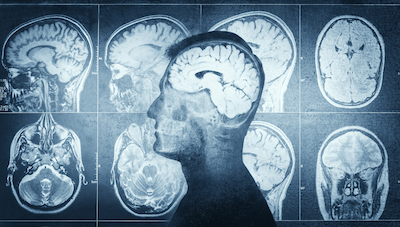
Oxytocin is the hormone thought to have the largest role in producing feelings of trust. It’s what fosters maternal behavior and mother-infant bonding. It also reduces anxiety. I was going to make a joke here about how, unfortunately, it’s not available on Amazon, but guess what? For $29.95, you can get a bottle of PherLuv oxytocin spray.
Yvonne gives it five stars and says she noticed her significant other paid more attention to her. Maybe it was the oxytocin. Or maybe it was the fact that her boyfriend found out she was buying hormones on Amazon, and he figured that probably meant he wasn’t paying enough attention to her. We’ll never know.

One study on the impact of oxytocin on trust employs game theory to understand the finer details of trust-based interactions. In it, two anonymous players were paired up to play a “trust game.”
They start the game with the same amount of money. Player 1 can choose to “cooperate” by giving some of their money to Player 2, or “defect” by keeping all of it. If both players cooperate, both receive $2. If Player 1 defects, Player 1 receives $3 and Player 2 receives nothing.
Should Player 1 trust Player 2 or not? These studies tend to find that when Player 1 receives an intranasal dose of oxytocin, he “cooperates” more often by giving more of his money to Player 2. It should be noted that while this study showed greater cooperation among oxytocin-dosed humans, it had the opposite effect when it came to cooperating with a player identified as a computer.
It should also be noted that you can’t go around giving people intranasal doses of oxytocin without them noticing.
Some of the ways we judge trustworthiness are automatic and subconscious. When you interact with someone for the first time, they’re making judgments of your trustworthiness before having much to go on.
You don’t start at zero and then earn or lose someone’s trust based on how you treat them. It’s more likely that you start at another number based on biases, stereotypes, and in-group/out-group labeling. As a salesperson, this does not work in your favor.
Gallup surveys show that public perception of salespeople remains historically low and has declined even further in recent years. Depending on the exact statistic, if you’re in sales or marketing, most people view you as about as trustworthy as the average member of Congress—maybe a little less.
What about B2B sales? Recent research by Gartner shows that 75% of B2B buyers now prefer a rep-free sales experience. You’re not starting at zero—you’re starting below it. Most prospects start out actively distrusting you, and only one in four wants anything to do with you.
Trust—building and preserving it—remains the most precious asset any sales professional can nurture. Thinking about the predictors others use to determine your trustworthiness can yield important insights. What are some ways you can foster trust and mutual respect with your prospects?
Hint: It does not involve oxytocin spray.
Transform your sales reps into trusted advisors. Contact us at mastery@maestrogroup.co to learn more.
Get the Maestro Mastery Blog, straight to your inbox.