There are so many benefits to a positive onboarding experience, so why does it often seem like an afterthought?
May 14, 2026
Originally published September 2021. Updated May 2026.
Fill in the blank: Onboarding is a ________.

What were your first thoughts? Process? Program? What if I told you that just having an onboarding process or program is not enough? For employers and for new hires, onboarding means different things. For employers, the goal may be to get someone ramped up and productive in the most efficient way possible. But for new hires, there are so many what-if’s they’re balancing: What if I don’t fit in? What if I can’t do what I’ve been hired to do? What if I’ve made a mistake? With this mismatch in priorities, it’s no wonder that 44% of new hires experienced regret or second thoughts about their new job within the first week.
Last week, we focused on how to leverage your sales process to attract high-quality prospective talent, compel them to join your company, and keep the momentum as they move toward their start date. Using the sales process metaphor for new-hire onboarding, think about customer success at your company. Now imagine if 44% of your customers regretted buying your product or service within a week of making the purchase. You’d probably be going out of business.
When you onboard a new customer, you want them to have the best experience so that they will have a positive view of your company and don’t have buyer’s remorse. Why aren’t you using the same approach when it comes to your new hires?
You invested both time and money in attracting and recruiting new talent. Don’t drop the ball once they walk through the door. According to a survey conducted by onboarding and engagement platform Enboarder, one-third of new hires have had poor onboarding experiences. The same survey found that 71% of employees could use more clarification on their role and job expectations during onboarding. If your new hire hasn’t found answers to those what-ifs, they may be looking to other companies to answer them.
This week, we’re going to cover ways to help your new hires be successful when they start.
Raise your hand if you onboard new hires with one or more of the following:

Well, you’re not alone. According to the Enboarder survey, only 26% of respondents said their most recent onboarding left them fully informed, engaged, and confident.
Why this approach is dangerous
There are a few things that happen when a company focuses their onboarding on process and paperwork. (Warning: I’m about to geek out on you with a few cognitive science concepts.)

First, if you focus your onboarding on your company and not on the new hire, you discount or (worse) completely disregard all the experience your new hire brings—experience that compelled you to hire them in the first place. When you do this, you put your new hires at a huge disadvantage. You’re not capitalizing on the wealth of knowledge they bring to your company. You’re also not giving your new hire the opportunity to contextualize their past experiences in a new environment. In learning theory, that type of critical thinking is called constructivism. A constructivist learning approach gives learners the space (and time) to think critically and synthesize information based on their past knowledge and experience. They can then connect that past experience to new challenges or problems.

Second, there’s a risk of cognitive overload. Cognitive overload is when our working memory (the part of our memory that decides what’s important to remember long term and what to forget) is trying to process more information than it can handle. According to a study conducted by Forbes Technology Council and OnePoll, 81% of new hires feel overwhelmed during the onboarding process. Once your new hire has hit that point of being overloaded, any new information introduced will be forgotten or conflated with other information learned and lead to things being learned incorrectly. New hires are eager to learn and are often compared to sponges. But like sponges, once they’ve soaked up a certain amount of water, they can’t absorb any more.

Lastly, when you schedule onboarding to only be a week or two, your new hire will fall subject to the forgetting curve, which describes the exponential rate at which we forget information. The only way to combat that is to strengthen the memory associated with that information by reinforcing it with immediate application of that information, or through spaced-out reinforcement (e.g., discussions with their peer on what they learned).
How can you evolve your onboarding so that you don’t lose your new hire?

The first thing to do is to remember that you are onboarding a person. That may seem like an obvious statement, but many companies forget about the human experience when creating their onboarding program. Humans are complex—each one with a set of emotions, motivations, behaviors, experiences, and skills. Understanding and tapping into those traits to design an impactful onboarding experience means putting them at the center, aka using Human-Centered Design (HCD). Small ways to infuse HCD into developing an onboarding experience include:
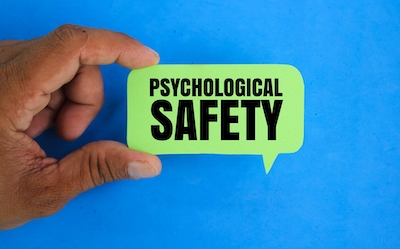
Second, create an environment of psychological safety for new hires. This concept focuses on building trust, curiosity, and resiliency that allows individuals to be vulnerable, ask questions, and get things wrong without the fear of being embarrassed. For new hires this is critical. If they think that they will look bad or give the wrong impression, they may be hesitant to speak up if something does not make sense or give their perspective based on their own experience. Think about those what-ifs. Psychological safety gives them the opportunity to answer those what-ifs either directly or indirectly. If you assign a peer to help with onboarding, this peer can help provide that psychological safety.

Not all sales qualification frameworks can be used to evaluate onboarding programs, but DRIVE can!
D = Decision
What it means:
Good “decision” questions for onboarding:
R = Resources
What it means:
Good “resources” questions for onboarding:
I = Impact
What it means:
Good “impact” questions for onboarding:
V = Velocity
What it means:
Good “velocity” questions for onboarding:
E = Expectations
What it means:
Good “expectations” questions for onboarding:
Onboarding can be more rewarding for both the new hire and your company. Ensuring your organization focuses on your new-hire’s experience during onboarding helps establish a positive relationship and create happy and long-term employees.
Are you looking for help with recruiting, hiring, onboarding, and training? Get in touch at mastery@maestrogroup.co.
Get the Maestro Mastery Blog, straight to your inbox.